
How To Use AI SEO Copywriting: A Beginner’s Guide For Remote Writers (2026)
Learning AI SEO copywriting and creating content that ranks on Google can feel difficult when you’re just getting started. From choosing the right keywords to organizing ideas and writing engaging content, there’s a lot to learn.
The good news is that AI writing tools can make many of these tasks easier. They can help you brainstorm ideas, build article outlines, improve readability, and speed up editing. The key is knowing how to use these tools as writing assistants instead of relying on them to do all the work.
In this guide, you’ll learn a simple step-by-step process for using AI in SEO copywriting. Whether you’re a blogger, freelancer, student, or remote writer, these practical tips will help you write content that’s useful for readers and easier for search engines to understand.
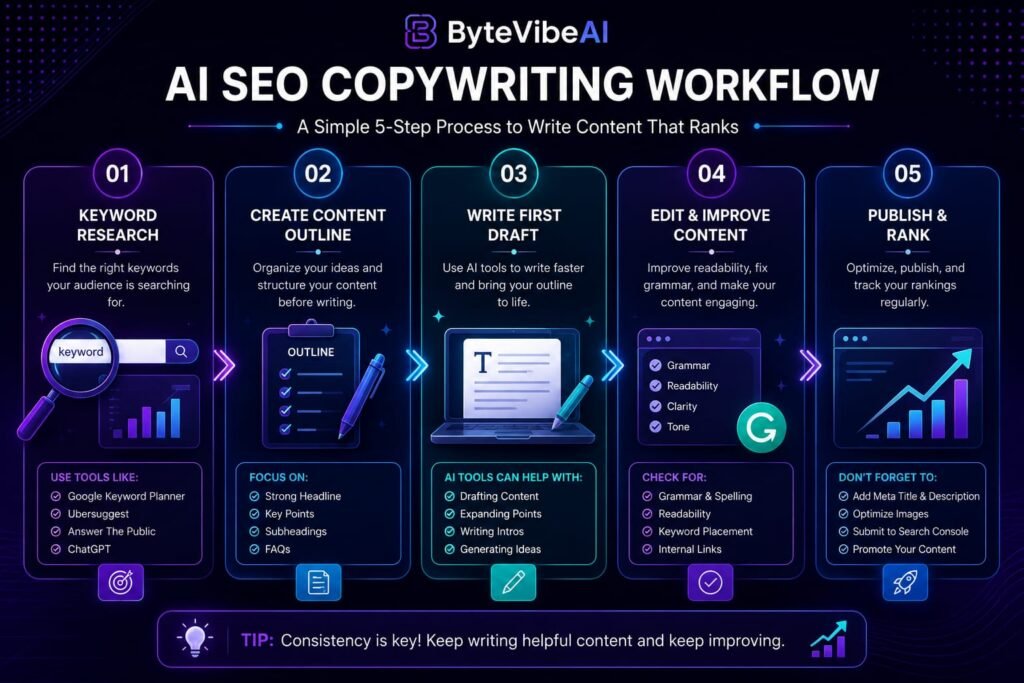
Quick SEO Copywriting Workflow
🔍 Step 1 — Keyword Research
Purpose: Find topics your audience is searching for.
Recommended Tool: ChatGPT + Google Search
📝 Step 2 — Create an Outline
Purpose: Organize your article before writing.
Recommended Tool: ChatGPT
✍️ Step 3 — Write the First Draft
Purpose: Turn your outline into a complete article.
Recommended Tool: Writesonic
✅ Step 4 — Edit & Improve
Purpose: Fix grammar, readability, and sentence flow.
Recommended Tool: Grammarly
🚀 Step 5 — Final SEO Review
Purpose: Check headings, keywords, internal links, images, and mobile readability before publishing.
Recommended Tool: Manual Review + Grammarly
Why AI Is Helpful for SEO Copywriting
Writing an SEO-friendly article takes more than simply adding keywords. You need to understand what readers are searching for, answer their questions clearly, and organize your content in a way that’s easy to follow.
For beginners, this process can take several hours. AI writing tools help by reducing repetitive tasks like brainstorming ideas, creating outlines, and improving grammar, allowing you to spend more time refining your content.
When used correctly, AI can help you:
- Save time during research
- Generate fresh content ideas
- Create structured outlines
- Improve grammar and readability
- Write better headings
- Speed up editing
- Stay consistent while writing
The best results come from combining AI assistance with your own knowledge, experience, and editing.
What Is SEO Copywriting?
SEO copywriting is the process of writing content that is useful for readers while making it easier for search engines to understand your page.
A well-written SEO article doesn’t focus on repeating the same keyword. Instead, it answers the reader’s question clearly and naturally while using keywords where they make sense.
A strong SEO article usually includes:
- Clear headings
- Helpful and accurate information
- Natural keyword placement
- Short paragraphs
- Easy-to-read formatting
- Internal links
- Relevant images with descriptive alt text
Following these basic principles can improve both the reading experience and your chances of ranking in search results.
Step-by-Step: How to Use AI SEO Copywriting
Learning SEO copywriting becomes much easier when you follow a simple process. Instead of trying to do everything at once, complete one step at a time. This approach helps you stay organized and create content that is both helpful for readers and optimized for search engines.
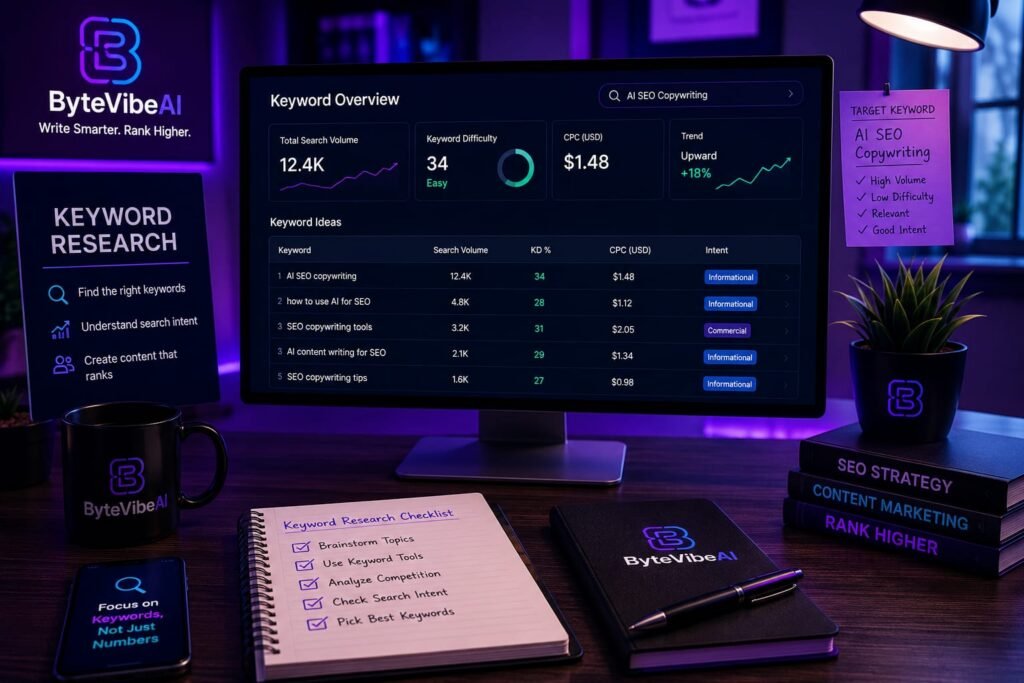
Step 1: Find the Right Keyword
Every successful SEO article starts with choosing the right keyword.
A keyword is the word or phrase people type into Google when they’re looking for information. Choosing a keyword that matches your audience’s search intent gives your content a better chance of reaching the right readers.
When selecting a keyword, look for one that:
- Matches your article topic
- Has clear search intent
- Is relevant to your audience
- Isn’t too competitive for a new website
For example, instead of using a broad keyword like AI, a more focused keyword such as AI SEO Copywriting is easier to target and provides clearer value to readers.
Step 2: Create a Content Outline
Before writing your article, prepare a simple outline.
An outline keeps your ideas organized and helps you avoid missing important sections.
A beginner-friendly outline usually includes:
- Introduction
- Main topic explanation
- Step-by-step guide
- Helpful tips
- Common mistakes
- Frequently Asked Questions-
- Final thoughts
Starting with an outline saves time and makes writing much easier.
Step 3: Write Your First Draft
Once your outline is ready, begin writing your first draft.
Don’t try to make every sentence perfect while writing. Focus on getting your ideas onto the page first.
Many beginners spend too much time editing while they write, which slows down the entire process.
A better approach is to finish the first draft completely and then improve it during editing.
Step 4: Write for People First
Search engines have become much better at understanding helpful content.
Instead of writing only for keywords, focus on answering the reader’s question clearly.
Ask yourself:
- Does this article solve the reader’s problem?
- Is the information easy to understand?
- Would I find this useful if I searched for this topic?
When your content genuinely helps readers, SEO usually improves naturally
Step 5: Improve Readability
A well-written article should also be easy to read.
Simple formatting keeps visitors engaged, especially on mobile devices.
Some easy ways to improve readability include:
- Keeping paragraphs short
- Using descriptive headings
- Breaking information into bullet points
- Using simple language
- Adding smooth transitions between sections
These small improvements make a big difference to the overall reading experience.
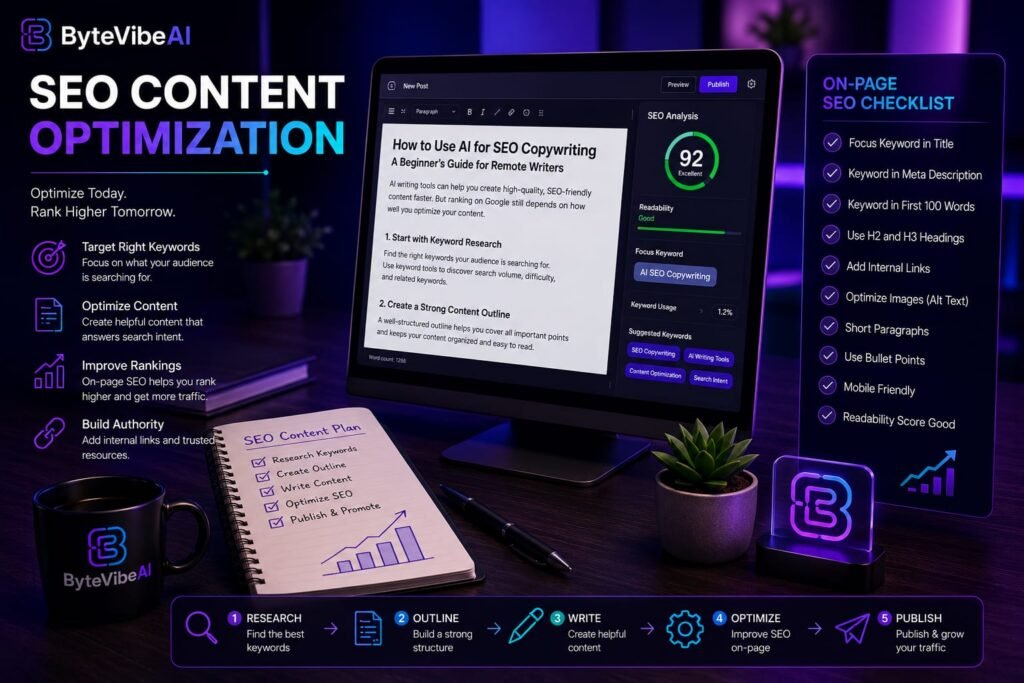
Step 6: Review Before Publishing
Before publishing your article, spend a few minutes checking everything carefully.
A final review helps you catch small mistakes that are easy to miss during writing.
Your publishing checklist should include:
- Grammar and spelling
- Heading structure
- Keyword placement
- Internal links
- External links (when appropriate)
- Image alt text
- Mobile responsiveness
- Overall readability
Taking a little extra time before publishing often results in a much more polished article.
Best Free AI Tools For SEO Copywriting
ChatGPT
- Best For: Brainstorming ideas and creating outlines.
- Official site: ChatGPT
Grammarly
- Best For: Grammar, spelling, and improving readability.
Writesonic
- Best For: Creating article drafts and marketing content.
Copy.ai
- Best For: Writing marketing copy, product descriptions, and social media content.
Rytr
- Best For: Short-form content and quick writing tasks.
Expert Tips
- Research before you start writing.
- Focus on helping readers instead of chasing rankings.
- Use keywords naturally throughout your article.
- Keep your formatting clean and mobile-friendly.
- Review every article before publishing.
- Continue updating older content as your website grows.
Common Mistakes to Avoid
Even with the right tools, beginners often make small mistakes that affect the quality of their content. Avoiding these common issues will help you write articles that are more useful, easier to read, and better optimized for search engines.
1. Choosing the Wrong Keyword
Writing a great article won’t help if you’re targeting a keyword that no one searches for. Always spend a few minutes researching your topic before you begin writing.
2. Adding Too Many Keywords
Repeating the same keyword in every paragraph makes your writing sound unnatural. Instead, use your focus keyword where it fits naturally and include related keywords throughout the article.
3. Publishing Without Editing
Your first draft is rarely your best draft. Always review grammar, spelling, headings, links, and formatting before publishing
4. Ignoring Mobile Readers
Most visitors read articles on their phones. Keep paragraphs short, use headings, bullet points, and avoid large tables that are difficult to read on smaller screens.
5. Depending Only on AI
AI can help you work faster, but your own knowledge, editing, and personal writing style are what make your content valuable. Use AI as a writing assistant, not as a replacement for your own thinking
Frequently Asked Questions
1. Can beginners use AI SEO copywriting?
Yes. AI writing tools are beginner-friendly and can help with keyword ideas, outlines, drafting, and editing. The final content should always be reviewed before publishing.
2. Is AI-generated content good for SEO?
Content can perform well if it is original, helpful, accurate, and satisfies the reader’s search intent. Quality is more important than how the first draft was created.
3. Which free AI writing tool should I start with?
If you’re just getting started, ChatGPT is useful for brainstorming, Grammarly helps improve grammar and readability, and Writesonic can assist with creating article drafts..
4. Should I edit AI-generated content before publishing?
Yes. Editing helps improve clarity, correct mistakes, and add your own experience and writing style.
5. How long should an SEO article be?
There is no fixed length, but most beginner guides perform well between 1,200 and 1,500 words when they fully answer the reader’s question.
Final Thoughts
Learning SEO copywriting takes practice, but every article you write helps you improve your skills. The goal isn’t to publish as quickly as possible—it’s to create content that answers real questions and provides genuine value to readers.
AI writing tools can save time by helping with brainstorming, outlining, drafting, and editing. When combined with careful research and your own ideas, they can make the writing process much more efficient without sacrificing quality.
Focus on writing clear, helpful content, continue learning from each article you publish, and keep improving your workflow over time. Small, consistent improvements often lead to the best long-term results.
You May Also Like
If you enjoyed this guide, you may also like these articles:
👉 Best Free AI Email Generators To Write Professional Work Emails In Seconds
👉 AI Content Editing Tools: 5 Best Free Tools To Make AI Text Sound More Human
👉 Top 5 Free AI Tools For Social Media Copy To Write High-Converting Posts Fast
👉 How To Use AI SEO Copywriting: A Beginner’s Guide For Remote Writers
👉 5 Best Free AI Writing Tools For Bloggers And Freelancers To Boost Content Creation
Explore our AI Writing guides on ByteVibeAI to discover beginner-friendly tutorials, practical SEO tips, and free AI tools that can help you create better content with confidence.